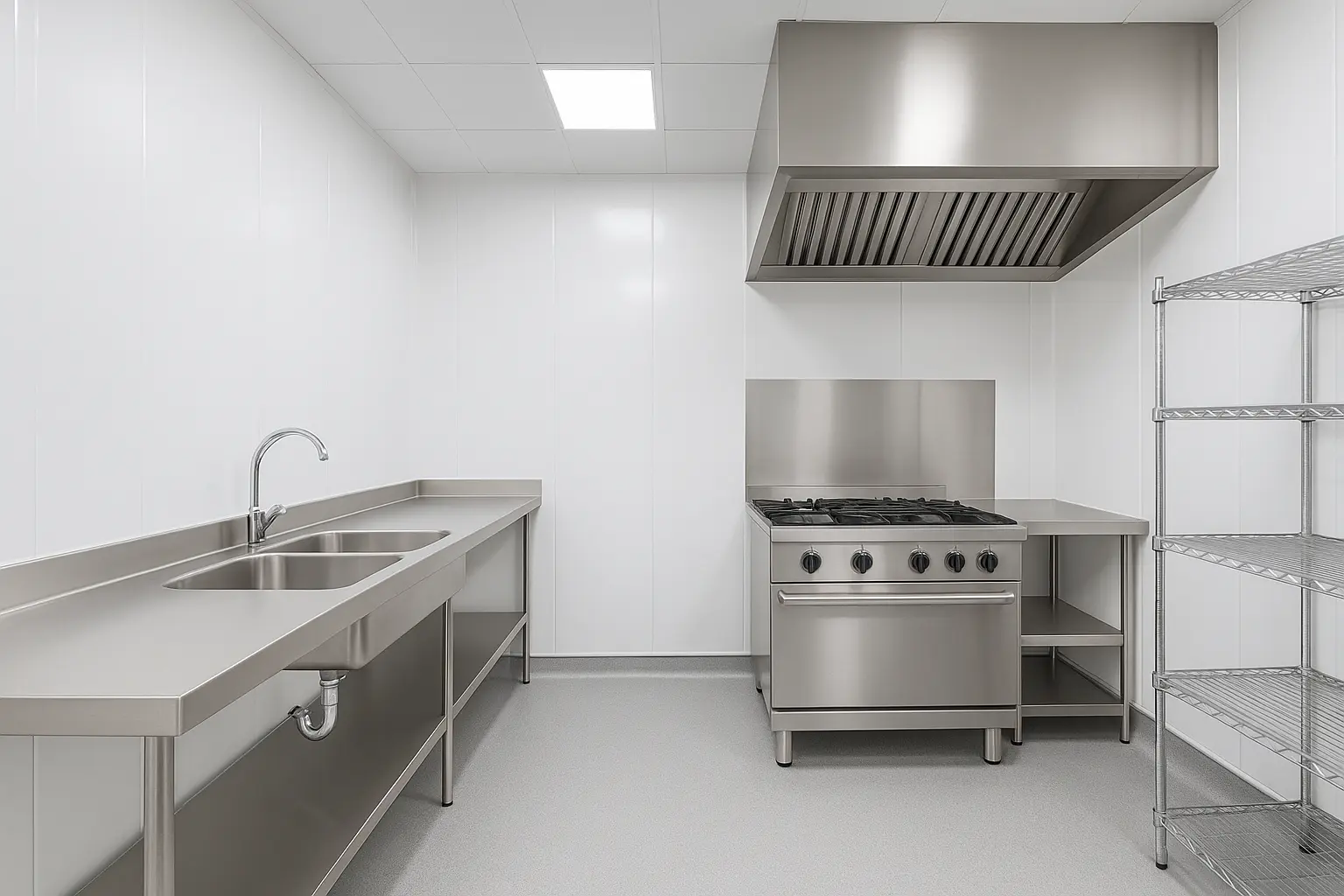
Hygienic Wall Cladding: A Practical Solution for Clean, Durable and Low-Maintenance Interiors
Maintaining clean, durable and easily maintained wall surfaces is an important consideration in many commercial and industrial environments. From professional kitchens and food preparation facilities to healthcare buildings, laboratories and public washrooms, wall finishes must withstand regular cleaning, moisture exposure and everyday wear. Traditional painted surfaces and ceramic tiles can present maintenance challenges, particularly where grout joints, surface damage or repeated cleaning create additional work.
Hygienic wall cladding provides an alternative to conventional wall finishes by creating a smooth, durable surface designed for environments where cleanliness and maintenance are priorities. Manufactured from materials such as PVC, hygienic wall panels can be installed over suitable prepared substrates to provide a practical protective lining. Their relatively straightforward cleaning requirements, moisture resistance and range of available specifications make them suitable for many commercial refurbishment and new-build projects.
One of the principal advantages of hygienic cladding is its smooth, non-porous surface. Unlike traditional tiled walls, which incorporate numerous grout joints, large-format cladding sheets can reduce the number of joints across a wall. This can simplify routine cleaning and reduce the number of areas where dirt and moisture might accumulate.
However, achieving a hygienic installation depends on more than the surface material itself. Sheet joints, internal corners, external edges and junctions with floors or ceilings must be detailed correctly. Poorly sealed joints or damaged trims can allow moisture and contamination to reach the underlying substrate, undermining the benefits of the cladding system.
PVC wall cladding is widely used because it combines moisture resistance with practical handling and installation characteristics. Sheets are available in different thicknesses, colours and finishes, allowing specifiers to select products suited to the intended environment.
White PVC remains a common choice in food preparation areas, commercial kitchens and healthcare settings because it creates a bright, clean appearance and makes visible contamination easier to identify. Coloured panels can also be used where interior design, zoning or operational requirements call for a different finish.
Material selection should consider the level of impact resistance required, exposure to cleaning chemicals, expected temperatures and the condition of the supporting wall.
Where Hygienic Wall Cladding Is Commonly Used
Commercial kitchens are among the most familiar applications for hygienic wall systems. Food preparation environments require surfaces that can be cleaned effectively and maintained in a suitable condition.
Walls near preparation benches, washing areas and storage facilities may experience regular splashes, grease deposits and contact with cleaning products.
Smooth PVC cladding can provide a practical finish in appropriate locations, helping cleaning teams maintain surfaces without dealing with extensive grout lines.
However, PVC products have temperature limitations and should not automatically be installed close to cooking appliances or other significant heat sources. Areas exposed to high temperatures may require stainless steel or another suitably specified material.
Food manufacturing and processing facilities also make extensive use of hygienic wall finishes.
These environments may require frequent washdowns, durable surfaces and careful detailing around equipment, pipework and service penetrations.
The selection of a cladding system should reflect the facility's cleaning procedures and operating conditions.
Where pressure washing, aggressive chemicals or demanding hygiene controls are involved, the suitability of the complete system should be confirmed with the manufacturer.
Healthcare environments represent another important application.
Treatment rooms, clinics, laboratories and certain clinical support areas may benefit from smooth wall surfaces that can withstand routine cleaning.
However, requirements vary between healthcare settings, and material selection should reflect the relevant infection prevention policies, cleaning methods and applicable technical standards.
A smooth PVC surface should not be assumed to provide antimicrobial performance unless the particular product has been tested and specified for that purpose.
Schools, nurseries and educational buildings may also benefit from durable wall finishes.
Corridors, washrooms, changing facilities and catering areas can experience substantial daily use.
Suitable cladding can help protect walls from moisture and routine cleaning while reducing the need for frequent repainting.
Leisure centres, gyms and changing rooms are further examples where moisture-resistant wall finishes can be useful.
In these settings, the detailing of joints and junctions is particularly important because persistent moisture can create problems behind poorly installed panels.
For businesses considering hygienic wall cladding, the intended application should always determine the material specification rather than selecting products based solely on appearance or initial cost.
Choosing the Right PVC Wall Cladding Sheets
PVC hygienic wall sheets are available in a range of thicknesses, with common options including 1.5mm, 2mm, 2.5mm and 3mm products.
The most appropriate thickness depends on the manufacturer's specification, the installation method and the expected operating conditions.
Thinner sheets may be suitable for certain lower-impact applications where the supporting wall is sound and properly prepared.
Thicker sheets can offer greater rigidity and may be preferred where additional durability is required, although thickness alone does not establish a product's impact resistance or overall performance.
The dimensions of the sheets are another important consideration.
Large-format panels can cover substantial wall areas with relatively few joints, helping create a consistent appearance.
However, sheet sizes must be considered alongside access restrictions, storage space and installation requirements.
Transporting large sheets through narrow corridors or stairwells may present challenges, particularly in existing buildings.
Accurate measurement and careful planning can help reduce unnecessary cutting and material waste.
Surface finish also influences suitability.
Gloss and satin finishes can provide different visual effects, while textured products may be appropriate for certain decorative applications.
For environments where frequent cleaning is essential, the ease of removing contamination should remain a priority.
The selected surface must also be compatible with the cleaning products and methods used within the building.
Some specialist PVC panels incorporate antimicrobial additives.
These products may offer particular properties under defined test conditions, but their performance should be assessed using relevant manufacturer documentation.
Antimicrobial additives do not eliminate the need for routine cleaning and appropriate hygiene procedures.
Fire performance is another critical specification consideration.
Different PVC products can have different reaction-to-fire classifications, and suitability depends on the building type, location and applicable fire safety requirements.
The relevant classification should be verified for the specific product and its intended installation arrangement.
A general description such as hygienic or commercial grade does not establish compliance with fire safety requirements.
For projects involving hygienic wall cladding, obtaining accurate technical data before purchasing can help prevent unsuitable material selection and costly installation changes.
Understanding Hygienic Wall Cladding Installation
Correct installation is essential to achieving a durable and easy-to-maintain wall finish.
The first stage involves assessing the existing substrate.
Walls should be structurally sound, suitably dry and free from loose material, contamination or defects that could interfere with adhesion.
The level of preparation required depends on the existing surface and the manufacturer's installation instructions.
In some refurbishment projects, PVC cladding can be fitted over suitable existing finishes, potentially reducing the need for extensive removal work.
However, the condition and compatibility of the underlying surface must be assessed before installation.
Loose tiles, unstable plaster or persistent moisture problems should not simply be concealed behind new panels.
Adhesive selection is another important consideration.
Specialist cladding adhesives are available for bonding PVC sheets to suitable substrates.
The correct adhesive depends on the panel specification, substrate, environmental conditions and installation method.
Some systems require particular adhesive coverage or application techniques to achieve a suitable bond.
Following the manufacturer's recommendations is important because inadequate adhesive coverage can contribute to movement, poor adhesion or visible surface irregularities.
Sheets should be measured and cut accurately before fixing.
Allowance may be necessary for thermal movement, depending on the material and installation system.
PVC can expand and contract in response to temperature changes, so panels should not be installed in a way that prevents movement where the manufacturer requires expansion allowances.
Joints between sheets can be finished using compatible joining profiles or other approved systems.
Internal and external corners may require specialist trims to create a neat and maintainable finish.
The choice between profiles and alternative jointing methods should reflect the manufacturer's approved system and the operational requirements of the building.
Sealants are commonly used around certain edges, junctions and service penetrations.
These must be compatible with the cladding and suitable for the environment.
Poorly applied sealant can create gaps or irregular surfaces that are difficult to clean.
Particular attention should be given to junctions around sinks, worktops, doors, pipework and floor finishes.
These locations can experience repeated moisture exposure and physical contact.
A well-designed installation should minimise unnecessary ledges and inaccessible gaps where contamination could accumulate.
For commercial kitchens and food processing facilities, the interface between wall cladding and flooring may require specific hygienic detailing.
Coved junctions and suitable sealing arrangements can help create surfaces that are easier to clean.
The complete installation should be inspected before the area is returned to normal use.
Adhesive curing times, sealant requirements and any protective film removal instructions should be followed.
PVC Cladding Compared with Traditional Wall Finishes
Ceramic tiles remain a familiar wall finish in kitchens, washrooms and commercial environments.
They can provide durable surfaces when correctly specified and installed.
However, tiled walls incorporate grout joints that may require additional cleaning and maintenance.
Over time, damaged grout or failed seals can allow moisture to penetrate behind the finish.
Large-format PVC sheets reduce the number of joints and can provide a more continuous appearance.
This may simplify routine cleaning, particularly in areas with extensive wall coverage.
However, PVC cladding is not suitable for every application.
High-temperature environments, demanding fire performance requirements and certain chemical exposures may require alternative materials.
Stainless steel is often considered where greater heat resistance or a robust metallic surface is required.
Commercial kitchens may use stainless steel around cooking equipment and PVC cladding in other suitable areas.
The materials can therefore complement one another rather than being direct substitutes in every location.
Painted walls offer another comparison.
Suitable specialist coatings can provide practical finishes in some commercial environments, but painted surfaces may require periodic redecorating when damaged or worn.
PVC sheets can protect the underlying wall and provide a durable finish where the product is appropriately specified.
The relative cost of different systems depends on material prices, substrate preparation, installation complexity and ongoing maintenance.
Although initial purchase price is important, lifecycle costs should also be considered.
A wall finish that requires less frequent repair or redecoration may provide better long-term value in certain environments.
For businesses evaluating hygienic wall cladding, comparing the full installation and maintenance requirements provides a more useful assessment than considering sheet prices alone.
Cleaning, Maintenance and Long-Term Performance
One of the main reasons businesses choose hygienic wall finishes is the potential to simplify cleaning routines.
Smooth PVC surfaces can generally be cleaned using compatible products and appropriate methods.
However, cleaning procedures should always follow the manufacturer's recommendations.
Abrasive materials, unsuitable solvents or aggressive chemicals may damage certain finishes.
The cleaning requirements of the premises should therefore be considered during product selection.
Routine inspections are also important.
Sheet joints, trims and sealed edges should be checked periodically for signs of damage or deterioration.
Any failed seals should be addressed promptly to reduce the risk of moisture entering behind the cladding.
Areas exposed to frequent impacts may require additional attention.
Damaged panels should be assessed to determine whether repair or replacement is necessary.
The ability to replace individual sheets can be useful, although the practical process depends on the installation system and surrounding panels.
Maintaining appropriate cleaning records may also be important in regulated environments.
However, installing hygienic cladding does not automatically establish compliance with food safety or healthcare requirements.
The wall finish forms one part of a wider approach involving cleaning procedures, staff practices, equipment maintenance and suitable building design.
Colour selection can also influence long-term appearance.
White cladding provides a bright finish and can make visible dirt easier to identify, while coloured panels may help establish different operational zones or complement interior design requirements.
The choice should reflect both practical and aesthetic considerations.
Where multiple areas are being refurbished, consistent product specifications can simplify future maintenance and replacement.
Accurate records of panel types, colours and installation materials can be useful when additional work is required.
Planning a Successful Hygienic Wall Cladding Project
A successful cladding project begins with understanding the environment in which the material will be installed.
The expected level of moisture exposure, cleaning frequency, temperature and physical contact should all influence specification.
Accurate measurements are essential for calculating material requirements.
Wall heights, widths, openings and service penetrations should be recorded before ordering sheets.
Allowances should be made for cutting waste and the selected jointing arrangement.
Trims, adhesives, sealants and other installation accessories should also be included in the material calculation.
Failing to account for these components can delay installation or increase project costs.
Delivery and storage arrangements deserve consideration, particularly when working with large-format PVC sheets.
Panels should be handled and stored according to manufacturer guidance to reduce the risk of damage or distortion.
Installation scheduling is also important in operational commercial premises.
Kitchens, healthcare facilities and food production environments may need to minimise downtime during refurbishment.
A phased installation programme can sometimes help reduce disruption, although the suitability of this approach depends on hygiene requirements and operational constraints.
For larger projects, professional installation may provide advantages where specialist detailing, complex substrates or demanding hygiene requirements are involved.
Smaller, straightforward installations may be suitable for experienced contractors familiar with the manufacturer's system.
In either case, the finished result depends on correct preparation, suitable materials and attention to joints and edges.
The choice of supplier can also influence project planning.
Access to technical documentation, installation accessories and consistent product availability can help simplify specification and procurement.
Where future extensions or repairs are anticipated, maintaining a record of the original products can help ensure compatibility.
A practical approach to hygienic wall cladding considers the complete wall system rather than treating the sheets as an isolated product. Suitable substrates, compatible adhesives, correctly finished joints and appropriate maintenance all contribute to long-term performance. By selecting materials that match the demands of the environment and ensuring they are installed correctly, businesses can create durable, easy-to-clean interiors that support everyday operations and remain practical for years to come.